

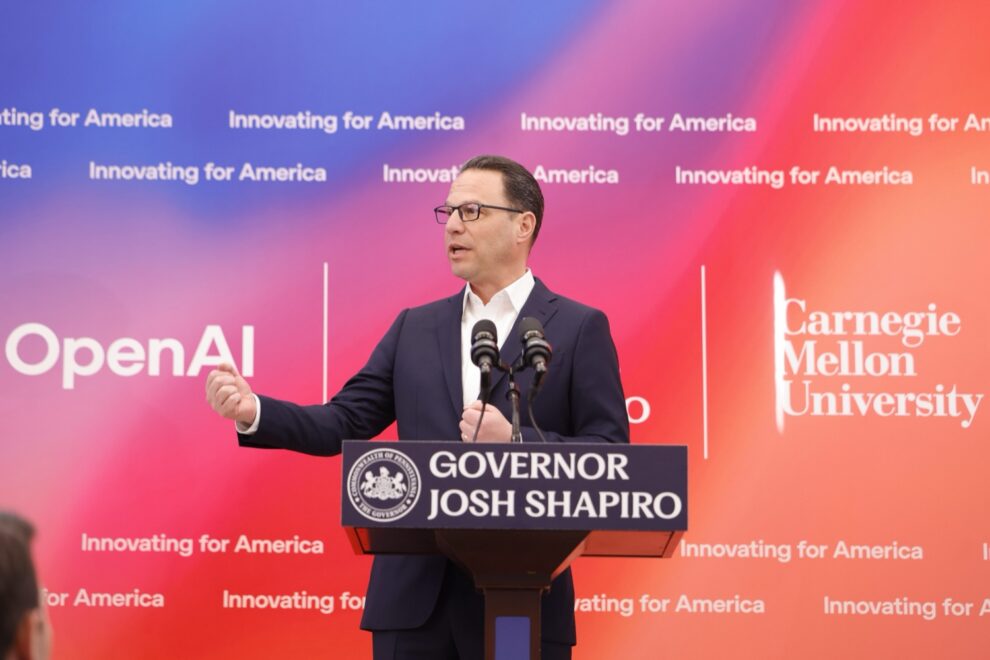
Pennsylvania was the first state to enter into an agreement with OpenAI in 2024. Now thousands of state employees are using it to do their work.
In 2024, Governor Josh Shapiro announced plans for a pilot program with OpenAI in Pennsylvania. The goal of the program was to test the rollout of tools among a select group of executive agency employees.
While only 175 state employees from 14 state agencies utilized artificial intelligence technology when the partnership was announced, that total is now up to more than 3,000.
Another 6,000 state employees are currently enrolled in training programs as a requirement for accessing the software.
Pennsylvania officials have established a Generative AI Governing Board, along with policies regulating AI use by state employees that are reviewed annually. Officials say that the use of AI tools has improved government efficiency without eliminating jobs.
The Shapiro administration is “focused on the safe and responsible adoption of generative AI and other AI technologies,” according to a statement from Bry Pardoe, the state’s chief information officer.
AI is used by Pennsylvania state employees for a variety of tasks, including deciphering handwritten clemency applications, scanning documents, and triaging customer service requests.
According to the Office of Administration, most employees access the tools at no additional cost. A total of 721 employees have access to ChatGPT Enterprise, which costs $25 per month for each user. The annual cost amounts to $216,000 per year.
The pilot program launched by Shapiro and OpenAI made Pennsylvania the first state in the U.S. to enter into an agreement with OpenAI. It was the first time employees in Pennsylvania were permitted to use generative AI tools at work.
“The pilot was designed to explore using AI tools from the perspective of Commonwealth employees; to understand when, where, and how tools could be of use to them, where using these tools may introduce opportunities for risk, and areas where employees might need additional training or resources to be successful,” said Dan Egan, a spokesperson for the Office of Administration.
When the pilot program began, OpenAI’s chief executive officer Sam Altman said that it “showcases Pennsylvania’s commitment to innovation” and would “provide valuable insights into how AI tools can responsibly enhance state services.”
During the pilot, state employees utilized ChatGPT to assist with drafting emails or other writing needs. Participants reported saving an average of 95 minutes per day, with 85% reporting favorable experiences.
Since the launch of the pilot program in Pennsylvania, OpenAI introduced a new model tailored specifically for government use and has entered into partnerships with other states across the United States.