

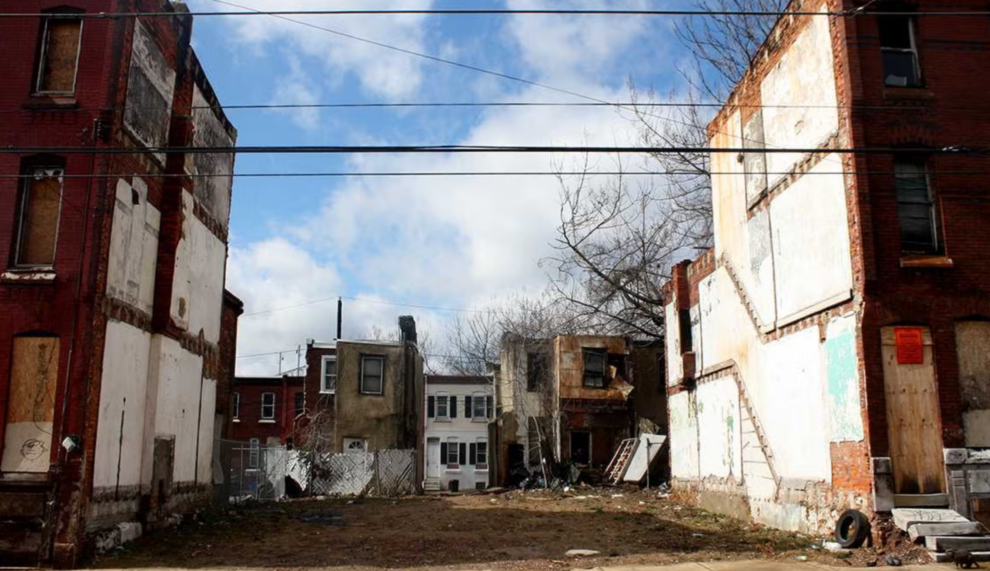
Neighbors of abandoned properties live in fear that the properties could come crashing down at any second.
Across Philadelphia, residents are living in fear that the home next door could come crashing down at any moment.
Vacant properties that are deemed “imminently dangerous” by the city’s Department of Licenses and Inspections pose a significant risk to residents, particularly ones living in row homes. Some of the buildings are at heightened risk of collapse.
In 2016, Philadelphia began using an inventory tool to keep track of which properties were vacant to protect the public from dangerous buildings.
At the time of the announcement, former Licenses and Inspections Commissioner David Perri said, “Protecting the public from deteriorating vacant, abandoned properties as they grow more and more likely to collapse is critical to L&I’s mission.”
Now, officials at the Department of Licenses and Inspections have said they are no longer using the inventory tool. They said the department relies on a list of complaints from residents, as well as its vacant property licenses, to keep track.
The Department identified nearly 120 properties in Philadelphia that are in imminent danger of failure or collapse. They also appeared on the city’s list of likely vacant buildings as of November. Of those 120 properties, 56 were rowhouses.
Of the properties identified, 95% of them were in zip codes with a median household income below the city median of $61,000.
According to a recent report, about 8,000 vacant buildings were included on the city’s spreadsheet of likely vacant properties.
In a recent analysis, it was revealed that 79% of those buildings listed as imminently dangerous by the Department of Licenses and Inspections also appeared on the list of likely vacant buildings.
Rowhomes are especially risky to the city’s residents because of shared walls. One building collapsing could be catastrophic for the properties nearby.
“While we recognize that the city has taken steps – demolishing some buildings, addressing some lots – the pace is way too slow, the resources too scarce, and the strategy too weak. Unsafe buildings are left standing for years, growing more hazardous, pulling down property values, and pushing people out of their homes,” said Dianna Coleman, activist and co-chair of OnePA West/Southwest Rising. She spoke at a news conference.
L&I’s Contractual Services Unit is responsible for inspecting imminently dangerous properties. The unit also administers the city’s demolition program.
“We’re out there doing our job,” said Basil Merenda, commissioner for L&I’s Inspections, Safety & Compliance division. “We’re out there making sure that these unsafe and [imminently dangerous] properties are properly addressed through procedures and that public safety is always being maintained.”
Yet, residents and activists alike are concerned by the city’s lack of accountability and action to protect the public from the dangers of abandoned properties.