
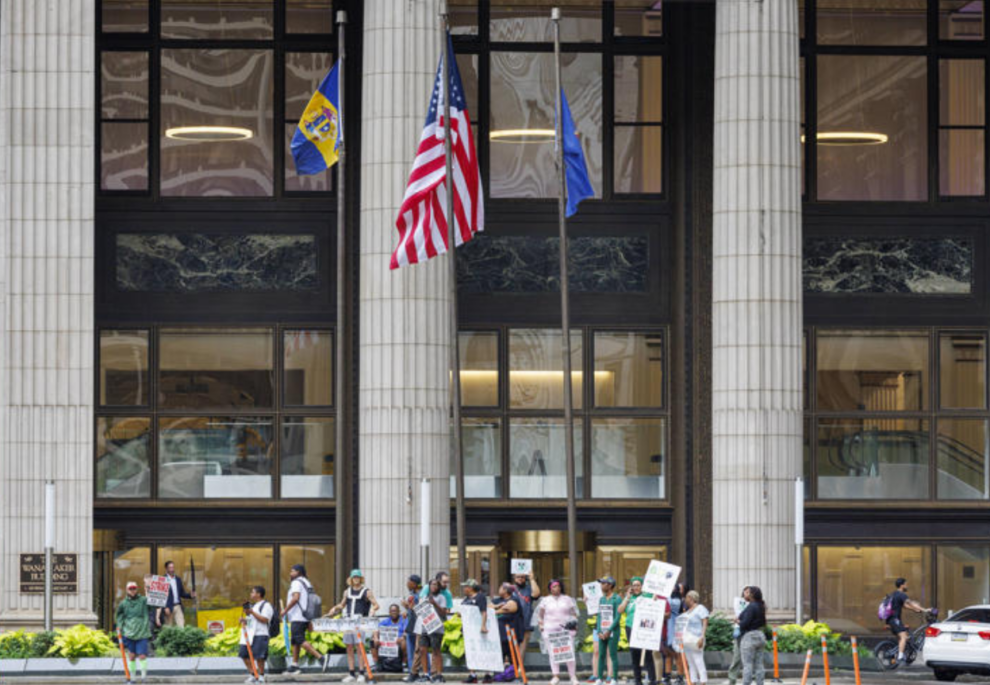
Workers say that Krasner’s administration has put up roadblocks against additional unions being secured.
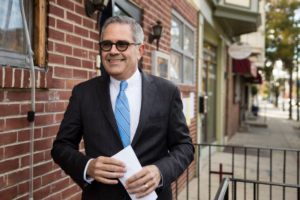
Philadelphia District Attorney Larry Krasner has found himself at odds with organized labor, which he has long supported. Workers inside his office have accused Krasner of putting up roadblocks against their proposed union.
Prosecutors inside Krasner’s office are gearing up for an election to authorize their union, with more than 100 lower-level employees separately trying to secure one. This includes paralegals and victim and witness coordinators in the office.
Five paralegals and coordinators spoke anonymously in a recent interview about their frustrations with Krasner throughout the process.
“He was elected in large part because of a number of very important pro-labor organizations in Philadelphia. If the DA just came out and publicly supported it, that’s what I would expect from the most progressive DA in America,” said one of the employees.
In an interview, Krasner said that he supports his employees’ right to organize a union through a “properly conducted free, fair, and final election.”
“I will support them 100% in whatever decision they make to form or not to form a union, and whatever union they choose if they do form one,” Krasner said.
Krasner also said that he believes the unionization effort comes from his office being underfunded by Mayor Cherelle Parker. Parker responded last month by saying his funding has increased every year since she became mayor.
The starting annual salary for paralegals and for coordinators is $46,000.
Last year, lower-level employees partnered with organizers at the United Steelworkers Local 286 to unionize. The union represents workers across several industries.
Some city employees have seen DC 47 as an alternative.
The prosecutors in Krasner’s office will be represented by DC 47 if their election is successful, but several lower-level employees believe USW will best represent them.
DC 33 filed paperwork with the state and argued that the paralegals belong in their municipal workers’ union. The Pennsylvania Labor Relations Board issued a preliminary ruling in agreement last month.
Also last month, Krasner’s office filed paperwork opposing the PLRB ruling, saying that the board does not have the authority to reclassify lower-level workers in his office. He referred to the board’s decision as a “rogue funding that was illegal.”
“This is a law enforcement agency. We have to follow the law. If there’s going to be civil service, it will be because our workers’ rights are protected because they decide it’s beneficial to them and because legal processes are followed,” he said.
While Krasner has positioned himself as a supporter of organized labor, his employees struggling to unionize and accusing him of putting up roadblocks will not help that image.