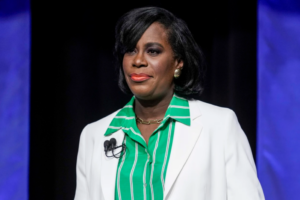

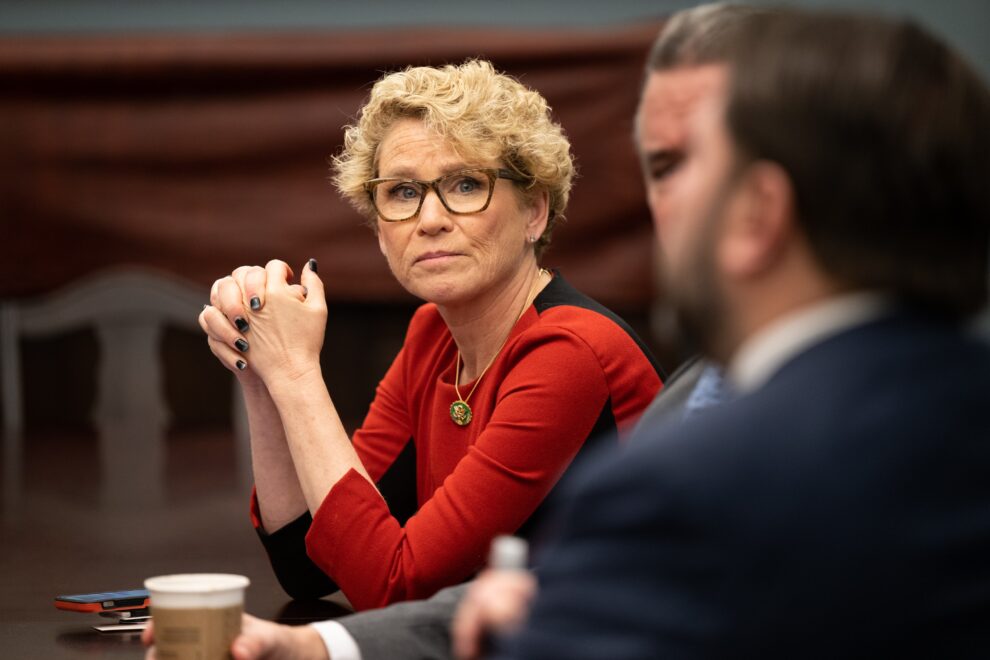
Rep Chrissy Houlahan argued the shutdown was “starving Americans” and then voted against ending the shutdown.
43 days after the federal government began the nation’s longest shutdown, the government reopened, lifted by a sprawling spending package that pairs a short-term funding patch with three full-year appropriations bills. President Donald Trump signed it Wednesday night, sending federal employees back to work and restoring paychecks to more than a million workers. But the reopening has done little to calm tensions on Capitol Hill, where lawmakers are now consumed by a last-minute provision that would allow senators to sue federal investigators.
The bill cleared the Senate 60–40 after eight Democrats broke with party leaders to join Republicans. In doing so, they abandoned the caucus’s central demand: extending enhanced Affordable Care Act subsidies set to lapse on December 31. The agreement merely promises a vote on the issue next month—without any assurance it will pass.
When news of the Senate’s deal broke, Rep. Brendan Boyle, a Philadelphia Democrat, criticized the Democrat senators who agreed with a “pinky swear” for a later vote on Obamacare subsidies. Similarly, Rep. Chrissy Houlahan said on X that Trump was “deliberately and strategically starving Americans” and before the vote, said she was a “hard no”, citing the lack of Obamacare provisions. Democratic Reps. Madeleine Dean and Dwight Evans also blasted the bill.
On the other side of the aisle, Republican Congressman Brian Fitzpatrick applauded the bill’s passage but lamented how long it took to do so. The American people “bore the cost of political gamesmanship” that led to the shutdown but that he would work with colleagues to address health care costs.
The package stitches together four separate measures: a continuing resolution funding most agencies through January 30, and three full-year appropriations covering Agriculture and the FDA, Veterans Affairs and military construction, and the legislative branch. More than 300 pages of text lay out the details.
The deal provides:
- Full-year funding for USDA, WIC, SNAP, veterans’ health care, military construction, and Congress through 2026
- Reimbursement to states for shutdown-era emergency spending, including SNAP payments
- Reversal of mass federal layoffs, with agencies required to rehire staff within five days
- A freeze on federal workforce cuts until January 30
Roughly 1.4 million federal workers who missed paychecks will receive full back pay.
SNAP, WIC, and Controversial Hemp Ban
SNAP is fully funded for the rest of the fiscal year, shoring up reserves after weeks of uncertainty for its 42 million participants. Child nutrition programs and school meal assistance stay whole, while WIC receives a major $603 million boost—enough to maintain benefits for seven million mothers and children. Senior nutrition programs also gain, including $460 million for the Commodity Supplemental Food Program.
The bill also includes a national ban on intoxicating hemp-derived products, a move that has alarmed the hemp industry and could wipe out entire market segments.
Security Funding for Government Officials
Hundreds of millions are directed toward security, including:
- $203 million for protecting members of Congress
- $852 million for the U.S. Capitol Police
- $28 million for Supreme Court security
- $30 million for U.S. Marshals guarding federal judges and officials
The increases follow years of heightened threats against public officials.
The Flashpoint: A New Legal Shield for Senators
The fiercest backlash centers on language added in the final hours by Senate Majority Leader John Thune. It will allow senators to sue the federal government for up to $500,000 per violation if investigators seize their electronic records without required notice. The provision applies retroactively to 2022, potentially giving eight Republican senators grounds to sue over subpoenas issued during Special Counsel Jack Smith’s 2023 election-interference investigation.
Members of both parties are furious. Speaker Mike Johnson called it “self-serving” and vowed to repeal it. Even some Republicans—Reps. Lauren Boebert and Anna Paulina Luna among them—accused Senate leaders of abusing shutdown negotiations. Democrats have blasted the measure as an “eleventh-hour airdrop” that bypassed regular order.
Healthcare Fight Still Looming
The question of ACA premium tax credits remains unsettled. Without action, premiums could spike next year, and more than two million people could lose coverage. Democrats say the credits are essential; Republicans argue they were temporary pandemic-era aid. The Senate has promised a December vote, but House leadership has not.
What’s Next
Although the shutdown is over, the fix is temporary. If lawmakers can’t agree on a new deal by January 30, the government could once again face a funding collapse.